Author: admin

  • Cargo Ship Hit by Projectile in Strait of Hormuz Attack as Iran Issues New Warning

    Cargo Ship Hit by Projectile in Strait of Hormuz Attack as Iran Issues New Warning

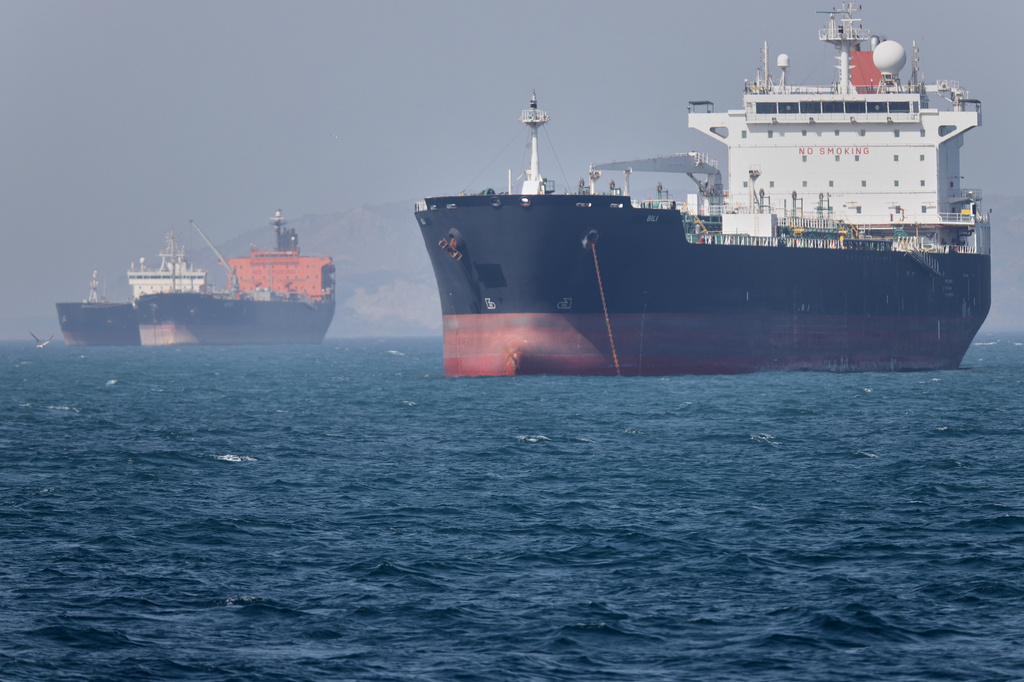
    A cargo ship was hit by an unknown projectile in the Strait of Hormuz on Thursday. The attack damaged the ship’s bridge but caused no injuries or oil spills. This Strait of Hormuz attack happened just hours after Iran’s Revolutionary Guards warned ships not to use a new route opened by Oman.

    The British military confirmed the incident. The ship was struck about 7.5 nautical miles off the coast of Oman. Maritime security firm Vanguard Tech identified the vessel as the Singapore-flagged container ship Ever Lovely. The Strait of Hormuz attack comes at a time of high tension in the region.

    What Happened in the Strait of Hormuz Attack

    The United Kingdom Maritime Trade Operations (UKMTO) said the ship was hit on its starboard side. The projectile caused damage to the bridge area. The ship’s master confirmed there were no casualties. There was also no environmental impact from the Strait of Hormuz attack.

    The attack took place near Oman’s Musandam Peninsula. This area is a narrow part of the strait where ships must pass close to shore. The vessel was using a new temporary route that Oman announced this week in coordination with the International Maritime Organization (IMO).

    Iran’s IRGC Threatened Ships Before the Attack

    Earlier on Thursday, Iran’s Islamic Revolutionary Guard Corps (IRGC) issued a strong warning. The IRGC said that only ships with Iranian permission could pass through the strait. A radio broadcast warned: “Transit only with IRGC permission, on designated routes. No permission, AIS off, or off-route, and you carry the consequences.”

    The IRGC called the new Omani route “unacceptable and completely dangerous.” They stated that “the only authorised route for passing through the Strait of Hormuz is the one declared by the Islamic Republic of Iran.” The IRGC added that “violators will be dealt with.”

    Oman Opened a New Shipping Route Through the Strait

    Oman announced a temporary shipping route through the Strait of Hormuz close to its coastline. This came after months of blocked shipping in the region. The Omani Foreign Minister Badr Albusaidi made clear that Muscat’s plans “do not entail the imposition of any transit fees.”

    Maritime data showed a surge in ships crossing the strait before the attack. About 70 crossings were recorded on the Oman route. Oil tankers led by the Stoic Warrior vessel sailed along the UAE and then Oman, passing by the Musandam Peninsula close to the shore.

    IMO Pauses Ship Evacuations After the Strike

    The International Maritime Organization paused its plan to evacuate stranded ships from the Persian Gulf. The head of the UN agency said the evacuation plan will be on hold until the agency can confirm safety guarantees for the ships on the evacuation list.

    Some ships did manage to pass through successfully. The shipping company Maersk said its container ship, the Maersk Baltimore, and another chartered vessel made it out on Thursday. But the Strait of Hormuz attack has raised new fears about safety in the waterway.

    US and Gulf Nations React to the Strait of Hormuz Attack

    US Vice President JD Vance said on Thursday that IRGC and US military representatives will be posted in Doha, Qatar. This is an apparent move to open a direct channel of communication with Iran’s elite military branch. Vance said: “The Iranians were like, ‘Fine, we’ll send somebody from the IRGC to go hang out in Doha with somebody from CENTCOM,’ and that’s how we’re going to settle a lot of these disputes.”

    US Secretary of State Marco Rubio met with foreign ministers from the six-nation Gulf Cooperation Council (GCC). He assured them that their interests would be protected in any agreement with Iran. Rubio told journalists that the US and Gulf allies would ensure no fees would be charged to ships moving through the strait.

    Rubio said the US wanted to ensure the Oman route remained open. “If that stops, then we’re going to have a problem,” Rubio warned. Bahrain’s Foreign Minister thanked the US for its support, saying that because of the agreement, “today we see a glimmer of hope for our region.”

    The Strait of Hormuz Crisis: A Background

    The Strait of Hormuz attack is part of a much larger crisis. Iran has largely blocked shipping traffic through the Strait of Hormuz since February 28, 2026. The strait is one of the world’s most important waterways. About one-fifth of all the world’s oil and natural gas passes through it.

    The crisis began after the US-Israeli strikes on Iran that resulted in the death of late Supreme Leader Ayatollah Ali Khamenei. Since then, Iran has used the strait as a pressure point. The IRGC is believed to be the key power broker in Iran as Ayatollah Mojtaba Khamenei remains absent from public view.

    Iran has proposed charging transit fees for vessels passing through the strait. The United States strongly opposes this idea. This week’s events showed both sides trying to assert control over shipping in the region.

    Previous Incidents in the Strait of Hormuz

    Thursday’s attack is not the first of its kind. On June 12, the UKMTO reported that another vessel had been struck by an unknown projectile in the Strait of Hormuz off Oman’s coast. In March 2026, the Thai-flagged cargo vessel Mayuree Naree was struck by Iranian projectiles, resulting in a fire that forced the crew to evacuate.

    Three cargo ships were hit by projectiles in the strait in a single day in March. The situation has caused major shipping companies to avoid the route. Insurance costs for ships passing through the strait have soared. Global oil prices have also been affected by the ongoing crisis.

    What the Strait of Hormuz Attack Means for Global Trade

    The Strait of Hormuz attack has serious implications for the global economy. About 21% of global petroleum consumption passes through the strait. Any disruption to shipping can cause oil prices to spike. This affects gasoline prices, heating costs, and the price of goods around the world.

    Richard Meade, editor-in-chief at Lloyd’s List, said: “Opportunistic operators — and there are many of them — emboldened by the lower transit risk, or at least the perceived lower transit risk, have begun chasing the backlog of trapped cargoes.” This shows that some shipping companies are trying to move goods despite the danger.

    But Thursday’s attack may change the calculus for many shipping companies. If the new Oman route is not safe, trapped cargoes may remain stuck for much longer. The global supply chain, already under stress, could face further disruptions.

    Who Was Behind the Strait of Hormuz Attack?

    No group has claimed responsibility for the attack. The projectile used has not been identified. A security source told the South China Morning Post that the ship was likely targeted by a drone. But no one has confirmed this information.

    The timing of the attack — just hours after the IRGC warning — has led many to suspect Iranian involvement. However, no official accusations have been made. The United States and its allies are likely investigating the incident. The Strait of Hormuz attack remains under investigation by maritime authorities.

    Diplomatic Efforts to End the Crisis

    Behind the scenes, diplomatic efforts continue. The plan to station IRGC and US officials in Qatar is a significant step. It would create a direct communication channel between two sides that have been at war. This could help prevent misunderstandings that might escalate into a larger conflict.

    Marco Rubio’s meeting with GCC ministers also showed diplomatic activity. The Gulf nations want stability in the region. They do not want their economies to suffer from continued disruption to shipping. Oman’s efforts to open a new route show how the crisis affects all countries near the strait.

    What Comes Next After the Ship Attack

    The Strait of Hormuz attack raises serious questions about the safety of the new Oman route. If ships cannot use this route without being attacked, the evacuation of stranded vessels will remain frozen. This would be a major setback for global trade and for the countries that depend on oil from the Persian Gulf.

    The US has made clear it will not accept Iran charging tolls on ships. Rubio said the US wants to keep the Oman route open. But the IRGC has shown it is willing to use force to enforce its control over the waterway. The standoff continues with no clear resolution in sight.

    The attack on the Ever Lovely shows how fragile the situation remains. After more than a week of relative calm, this incident proves that the Strait of Hormuz is still a dangerous place for shipping. The world will be watching closely to see how the US, Iran, and Gulf nations respond to the latest Strait of Hormuz attack.

    Sources: Euronews | Kurdistan24

  • Donald Trump’s “we’ll finish one first” remark about taking over Cuba spreads widely as new sanctions are announced.

    Donald Trump’s “we’ll finish one first” remark about taking over Cuba spreads widely as new sanctions are announced.

    Donald Trump joked Friday that the U.S. Navy could take on Cuba while returning from Iran.

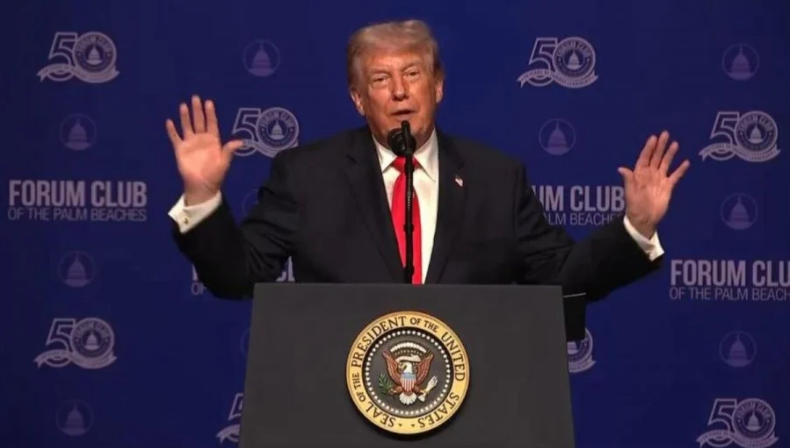
    During a keynote address at the Forum Club of the Palm Beaches on Friday, Donald Trump suggested in a lighthearted tone that the US Navy could turn its attention to Cuba after completing operations related to Iran, joking about acting “almost immediately.”

    The president also signed a broad executive order on May 1, 2026, targeting key sectors of Cuba’s economy, including energy, defense, mining, and financial services.

    The measures extend to foreign companies and financial institutions engaging with Havana. The move follows a 2023 US-backed operation that resulted in the removal of Nicolas Maduro from power in Venezuela.

    Trump further accused Cuba of supporting Maduro’s alleged drug-related networks in exchange for oil—supplies that have since been disrupted by US sanctions. The resulting oil embargo has intensified fuel shortages on the island, severely affecting healthcare services and infrastructure.

    The United Nations has issued repeated warnings that Cuba is nearing a significant humanitarian crisis due to these conditions.

    Cuban Foreign Minister Bruno Rodríguez Parrilla condemned the sanctions, stating on X that the measures represent “collective punishment” against the Cuban population.

    He noted the timing of the announcement, pointing out it coincided with May 1 demonstrations in Cuba, where citizens protested the longstanding US blockade and energy restrictions.

    Parrilla also criticized Washington for what he described as interference in foreign affairs under the pretext of promoting democracy, while alleging domestic repression within the United States.

    He argued that the sanctions violate international law and the United Nations Charter, asserting that the US lacks authority to impose such measures on Cuba or third parties.

    Meanwhile, Washington has been urging Cuban leadership to engage in negotiations, warning that time for dialogue may be limited.

    President Miguel Díaz-Canel has consistently rejected these calls, describing them as being made under unfavorable and “hostile” conditions.

    Cuban officials maintain that any future talks must be conducted on equal terms, without threats to the country’s sovereignty or territorial integrity.

  • US plans to reduce its troop presence in Germany by 5,000 as tensions rise between Trump and Merz

    US plans to reduce its troop presence in Germany by 5,000 as tensions rise between Trump and Merz

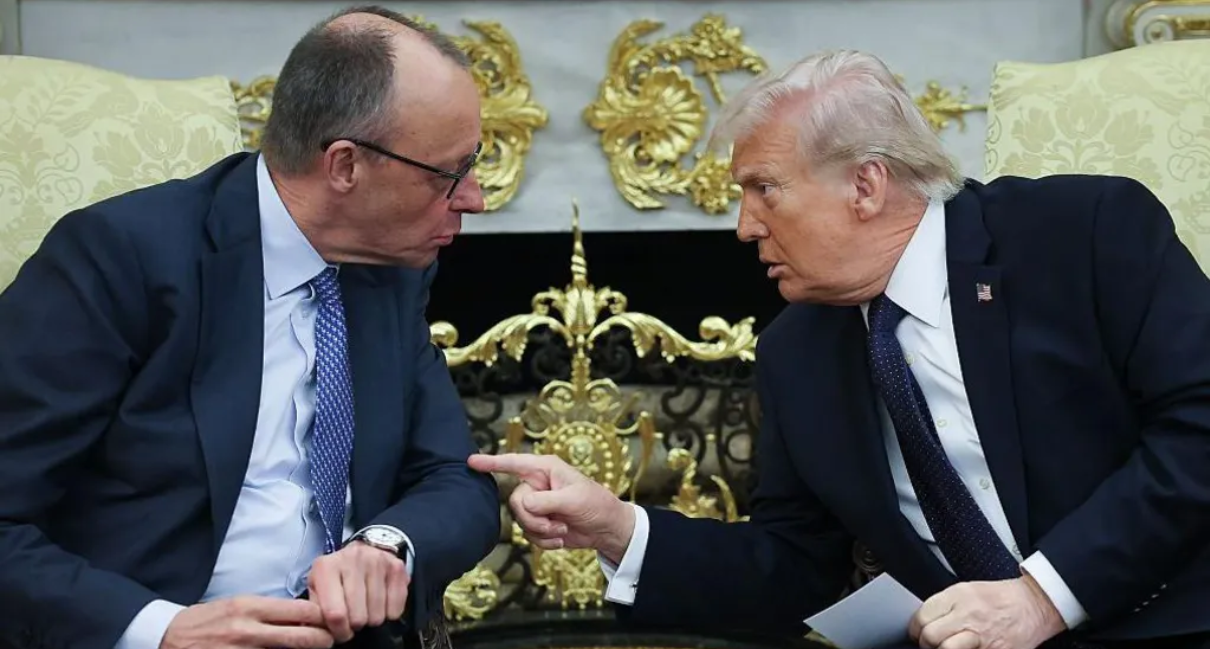
    The US Department of Defense is planning to withdraw 5,000 troops from Germany, a move that comes amid rising tensions between President Donald Trump and German Chancellor Friedrich Merz over the war with Iran.

    The decision follows Trump’s criticism of Merz, who had suggested the US was “humiliated” in negotiations with Iran.

    The United States maintains a substantial military presence in Germany, with more than 36,000 active-duty personnel stationed across the country as of last December.

    Germany’s Defence Minister Boris Pistorius said the presence of US forces in Europe—especially in Germany—serves the interests of both nations. However, he added that the withdrawal did not come as a surprise, noting it had been foreseeable that the US might scale back its troop levels in Europe.

    In social media posts, Trump sharply criticised Merz, calling his leadership ineffective and pointing to issues such as immigration and energy policy. He has also floated the idea of reducing US troop deployments in Italy and Spain.

    A Pentagon spokesperson, Sean Parnell, said the order to withdraw troops from Germany was issued by Defence Secretary Pete Hegseth.

    “This decision follows a comprehensive review of the Department’s force posture in Europe and reflects current operational needs and conditions on the ground,” he said.

    “We anticipate the withdrawal will be completed within the next six to twelve months.”

    Trump, who has long been critical of the NATO alliance, has recently criticised allies for declining to take part in efforts to reopen the Strait of Hormuz.

    When asked on Thursday whether he might also withdraw US troops from Italy and Spain, Trump replied: “I probably will — why shouldn’t I?”

    “Italy has not been of any help to us and Spain has been terrible,” he added, faulting both countries over their response to the conflict with Iran.

    “In every case, they said, ‘I don’t want to get involved.’”

    Earlier this week, Merz told university students that “the Americans clearly have no strategy” and said he could not identify any clear strategic exit plan.

    “The Iranians are clearly highly adept at negotiations — or more precisely, at avoiding them — allowing the Americans to travel to Islamabad and return without any outcome,” he said.

    He added that the Iranian leadership was “humiliating” the entire nation.

    In response, Trump posted on Truth Social, claiming that Merz believed it was “acceptable for Iran to have a nuclear weapon” and saying he “doesn’t know what he’s talking about”.

    “No wonder Germany is doing so poorly, both economically and otherwise!” the post added.

    The BBC has reached out to the German embassy in Washington for comment.

    The US maintains its largest European military presence in Germany, compared with roughly 12,000 troops in Italy and about 10,000 in the UK.

    Many of these forces are based at Ramstein Air Base near the south-western city of Kaiserslautern.

    Trump has previously suggested reducing US troop levels in Germany, though such plans have not yet been implemented.

    Only Japan hosts a larger US troop presence than Germany.

    In 2020, a plan to relocate 12,000 US troops from Germany to other NATO countries or back to the United States was blocked by Congress and later reversed by President Joe Biden.

    At the time, Trump had criticised Germany as “delinquent” for failing to meet NATO’s defence spending target of 2% of GDP.

    However, this has shifted significantly under the Merz government.

    Germany is projected to spend €105.8bn (£91bn) on defence in 2027, with total military expenditure expected to reach 3.1% of GDP next year.

    Last year, the US moved to reduce its troop presence in Romania as part of Trump’s broader strategy to pivot military focus from Europe to the Indo-Pacific region.

  • Trump says King Charles shares his view that Iran should not acquire nuclear weapons.

    Trump says King Charles shares his view that Iran should not acquire nuclear weapons.

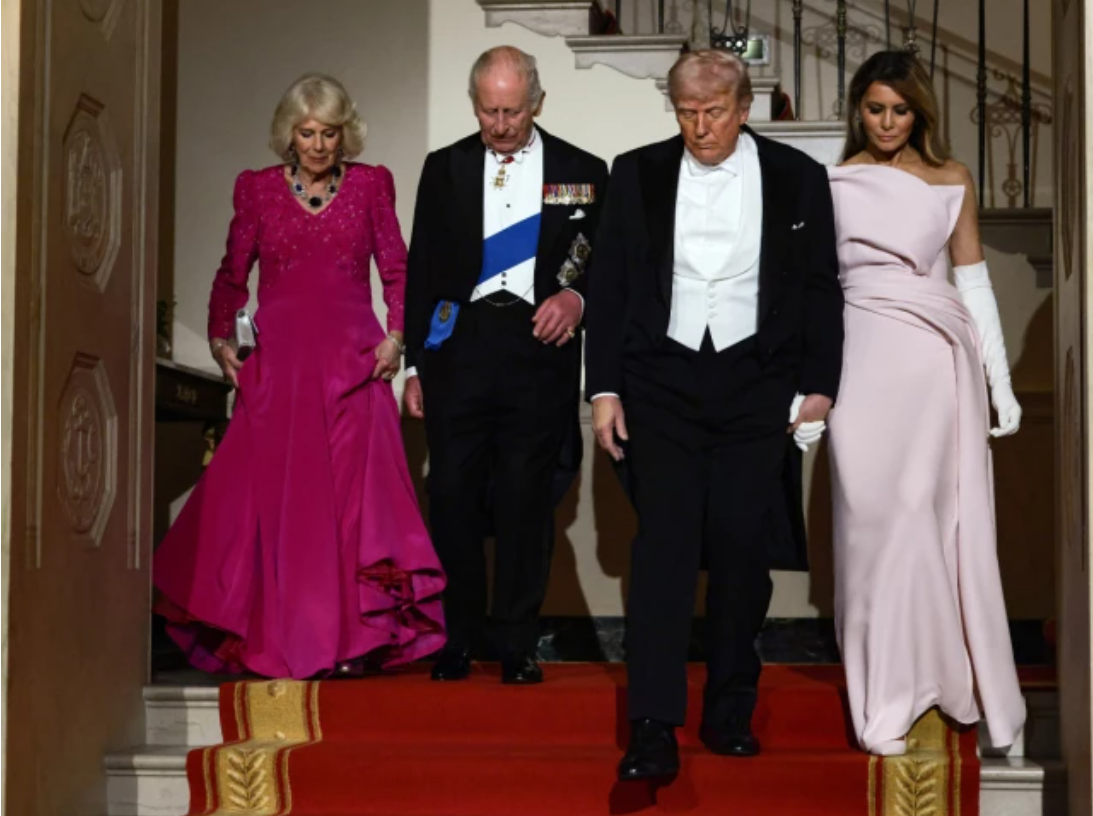
    US President Donald Trump said on Tuesday that Britain’s King Charles shares the view that Iran should not obtain nuclear weapons, bringing the sensitive issue of the Middle East conflict into remarks made during a White House state dinner held in the monarch’s honour.

    The dinner took place on the second day of Charles’s four-day visit to the United States, amid strained relations between Washington and London. Trump has recently criticised British Prime Minister Keir Starmer, accusing him of not offering sufficient support regarding the conflict with Iran.

    “We’re engaged in some work in the Middle East right now, and it’s going very well,” Trump said during the event.

    He added that the United States had “militarily defeated” its opponent and insisted it would never allow Iran to acquire nuclear weapons, claiming that King Charles strongly agreed with that position.

    In his own remarks after Trump, King Charles did not address Iran or the ongoing conflict. As monarch, he does not speak on behalf of the British government.

    When asked about Trump’s comments, the British Embassy in Washington directed inquiries to Buckingham Palace, which did not immediately respond.

    Earlier in a speech to Congress, Charles avoided direct reference to the Iran conflict but touched on broader geopolitical themes, including NATO, continued US support for Ukraine, and the risks of isolationism.

    Both the United States and the United Kingdom have long maintained that Iran should not develop nuclear weapons.

    Tehran denies seeking such weapons, stating that its nuclear programme is for peaceful purposes, including uranium enrichment, under its rights as a signatory to the Nuclear Non-Proliferation Treaty.

    Iran ‘figuring out its leadership’

    Efforts to resolve the US-Israeli conflict with Iran remained stalled on Tuesday. Trump said he was dissatisfied with Tehran’s latest proposal and claimed Iran had indicated it was in a “state of collapse” while reassessing its leadership.

    Iran’s proposal reportedly suggested postponing discussions about its nuclear programme until after the conflict ends and shipping disputes are settled. However, US officials say Trump wants nuclear issues addressed immediately.

    In a social media post, Trump stated that Iran had requested the reopening of the Strait of Hormuz while it worked through internal leadership challenges, though there was no clear indication of how this message was conveyed. Tehran did not immediately respond.

    An Iranian military spokesperson earlier said the country does not consider the war to be over.

    Since the conflict began on February 28, Iran has restricted most shipping through the Strait of Hormuz, a critical route for global energy supplies, while the US has imposed a blockade on Iranian vessels.

    According to reports, Trump has directed aides to prepare for a prolonged blockade of Iranian ports.

    Iran’s guards take greater role

    Prospects for renewed peace efforts have diminished in a conflict that has resulted in thousands of civilian casualties and disrupted global markets. Trump recently cancelled a planned visit by his envoys Steve Witkoff and Jared Kushner to Pakistan, which had been acting as a mediator.

    Iranian Foreign Minister Abbas Araghchi travelled to Islamabad twice over the weekend for discussions.

    Following the deaths of several senior Iranian figures in US-Israeli strikes, Iran’s leadership structure has become less centralised. The reported killing of Supreme Leader Ayatollah Ali Khamenei and the succession of his son Mojtaba has shifted influence toward hardline factions within the Islamic Revolutionary Guard Corps.

    Officials familiar with negotiations say Iran’s proposal outlines a phased approach, beginning with ending hostilities and securing guarantees against renewed conflict, followed by resolving maritime disputes and eventually addressing the nuclear issue.

    This approach echoes elements of the 2015 nuclear agreement, from which Trump withdrew during his first term.

    Domestically, Trump is facing growing pressure over the war. His approval rating has declined, with recent polling showing decreasing public support amid concerns over economic conditions and the conflict.

    He has also clashed with European leaders, criticising German Chancellor Friedrich Merz over his stance on Iran.

    Despite tensions, King Charles emphasised in his congressional address that the UK and US remain close allies committed to defending democratic values.

    Oil prices rise again

    With no clear resolution in sight, oil prices have continued to climb, with Brent crude rising करीब 3% to approximately $111 per barrel.

    The World Bank has warned that energy prices could rise significantly in 2026 if disruptions linked to the conflict persist.

    The United Arab Emirates has announced its withdrawal from OPEC and OPEC+, highlighting divisions among Gulf countries over Iran.

    Recent data shows several Iranian oil tankers have been forced to turn back due to the US blockade, while shipping through the Strait of Hormuz has dropped sharply.

    Iranian officials say alternative trade routes are being used to mitigate the impact.

    Meanwhile, the US has imposed new sanctions targeting entities linked to Iran’s financial networks and warned that companies facilitating passage through the Strait of Hormuz could face penalties.