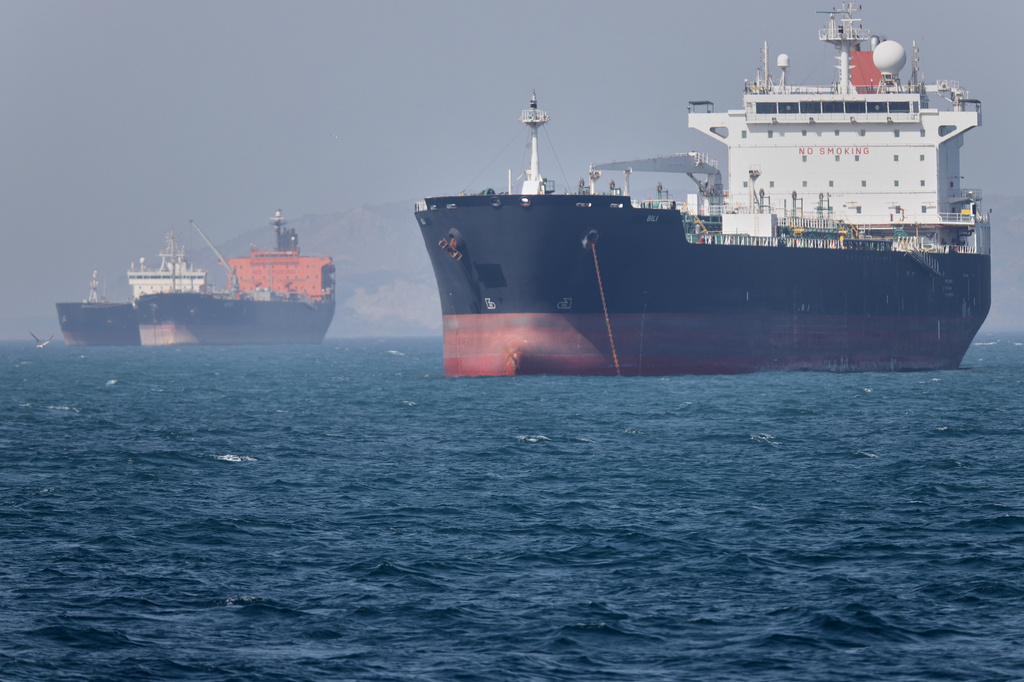
A cargo ship was hit by an unknown projectile in the Strait of Hormuz on Thursday. The attack damaged the ship’s bridge but caused no injuries or oil spills. This Strait of Hormuz attack happened just hours after Iran’s Revolutionary Guards warned ships not to use a new route opened by Oman.
The British military confirmed the incident. The ship was struck about 7.5 nautical miles off the coast of Oman. Maritime security firm Vanguard Tech identified the vessel as the Singapore-flagged container ship Ever Lovely. The Strait of Hormuz attack comes at a time of high tension in the region.
What Happened in the Strait of Hormuz Attack
The United Kingdom Maritime Trade Operations (UKMTO) said the ship was hit on its starboard side. The projectile caused damage to the bridge area. The ship’s master confirmed there were no casualties. There was also no environmental impact from the Strait of Hormuz attack.
The attack took place near Oman’s Musandam Peninsula. This area is a narrow part of the strait where ships must pass close to shore. The vessel was using a new temporary route that Oman announced this week in coordination with the International Maritime Organization (IMO).
Iran’s IRGC Threatened Ships Before the Attack
Earlier on Thursday, Iran’s Islamic Revolutionary Guard Corps (IRGC) issued a strong warning. The IRGC said that only ships with Iranian permission could pass through the strait. A radio broadcast warned: “Transit only with IRGC permission, on designated routes. No permission, AIS off, or off-route, and you carry the consequences.”
The IRGC called the new Omani route “unacceptable and completely dangerous.” They stated that “the only authorised route for passing through the Strait of Hormuz is the one declared by the Islamic Republic of Iran.” The IRGC added that “violators will be dealt with.”
Oman Opened a New Shipping Route Through the Strait
Oman announced a temporary shipping route through the Strait of Hormuz close to its coastline. This came after months of blocked shipping in the region. The Omani Foreign Minister Badr Albusaidi made clear that Muscat’s plans “do not entail the imposition of any transit fees.”
Maritime data showed a surge in ships crossing the strait before the attack. About 70 crossings were recorded on the Oman route. Oil tankers led by the Stoic Warrior vessel sailed along the UAE and then Oman, passing by the Musandam Peninsula close to the shore.
IMO Pauses Ship Evacuations After the Strike
The International Maritime Organization paused its plan to evacuate stranded ships from the Persian Gulf. The head of the UN agency said the evacuation plan will be on hold until the agency can confirm safety guarantees for the ships on the evacuation list.
Some ships did manage to pass through successfully. The shipping company Maersk said its container ship, the Maersk Baltimore, and another chartered vessel made it out on Thursday. But the Strait of Hormuz attack has raised new fears about safety in the waterway.
US and Gulf Nations React to the Strait of Hormuz Attack
US Vice President JD Vance said on Thursday that IRGC and US military representatives will be posted in Doha, Qatar. This is an apparent move to open a direct channel of communication with Iran’s elite military branch. Vance said: “The Iranians were like, ‘Fine, we’ll send somebody from the IRGC to go hang out in Doha with somebody from CENTCOM,’ and that’s how we’re going to settle a lot of these disputes.”
US Secretary of State Marco Rubio met with foreign ministers from the six-nation Gulf Cooperation Council (GCC). He assured them that their interests would be protected in any agreement with Iran. Rubio told journalists that the US and Gulf allies would ensure no fees would be charged to ships moving through the strait.
Rubio said the US wanted to ensure the Oman route remained open. “If that stops, then we’re going to have a problem,” Rubio warned. Bahrain’s Foreign Minister thanked the US for its support, saying that because of the agreement, “today we see a glimmer of hope for our region.”
The Strait of Hormuz Crisis: A Background
The Strait of Hormuz attack is part of a much larger crisis. Iran has largely blocked shipping traffic through the Strait of Hormuz since February 28, 2026. The strait is one of the world’s most important waterways. About one-fifth of all the world’s oil and natural gas passes through it.
The crisis began after the US-Israeli strikes on Iran that resulted in the death of late Supreme Leader Ayatollah Ali Khamenei. Since then, Iran has used the strait as a pressure point. The IRGC is believed to be the key power broker in Iran as Ayatollah Mojtaba Khamenei remains absent from public view.
Iran has proposed charging transit fees for vessels passing through the strait. The United States strongly opposes this idea. This week’s events showed both sides trying to assert control over shipping in the region.
Previous Incidents in the Strait of Hormuz
Thursday’s attack is not the first of its kind. On June 12, the UKMTO reported that another vessel had been struck by an unknown projectile in the Strait of Hormuz off Oman’s coast. In March 2026, the Thai-flagged cargo vessel Mayuree Naree was struck by Iranian projectiles, resulting in a fire that forced the crew to evacuate.
Three cargo ships were hit by projectiles in the strait in a single day in March. The situation has caused major shipping companies to avoid the route. Insurance costs for ships passing through the strait have soared. Global oil prices have also been affected by the ongoing crisis.
What the Strait of Hormuz Attack Means for Global Trade
The Strait of Hormuz attack has serious implications for the global economy. About 21% of global petroleum consumption passes through the strait. Any disruption to shipping can cause oil prices to spike. This affects gasoline prices, heating costs, and the price of goods around the world.
Richard Meade, editor-in-chief at Lloyd’s List, said: “Opportunistic operators — and there are many of them — emboldened by the lower transit risk, or at least the perceived lower transit risk, have begun chasing the backlog of trapped cargoes.” This shows that some shipping companies are trying to move goods despite the danger.
But Thursday’s attack may change the calculus for many shipping companies. If the new Oman route is not safe, trapped cargoes may remain stuck for much longer. The global supply chain, already under stress, could face further disruptions.
Who Was Behind the Strait of Hormuz Attack?
No group has claimed responsibility for the attack. The projectile used has not been identified. A security source told the South China Morning Post that the ship was likely targeted by a drone. But no one has confirmed this information.
The timing of the attack — just hours after the IRGC warning — has led many to suspect Iranian involvement. However, no official accusations have been made. The United States and its allies are likely investigating the incident. The Strait of Hormuz attack remains under investigation by maritime authorities.
Diplomatic Efforts to End the Crisis
Behind the scenes, diplomatic efforts continue. The plan to station IRGC and US officials in Qatar is a significant step. It would create a direct communication channel between two sides that have been at war. This could help prevent misunderstandings that might escalate into a larger conflict.
Marco Rubio’s meeting with GCC ministers also showed diplomatic activity. The Gulf nations want stability in the region. They do not want their economies to suffer from continued disruption to shipping. Oman’s efforts to open a new route show how the crisis affects all countries near the strait.
What Comes Next After the Ship Attack
The Strait of Hormuz attack raises serious questions about the safety of the new Oman route. If ships cannot use this route without being attacked, the evacuation of stranded vessels will remain frozen. This would be a major setback for global trade and for the countries that depend on oil from the Persian Gulf.
The US has made clear it will not accept Iran charging tolls on ships. Rubio said the US wants to keep the Oman route open. But the IRGC has shown it is willing to use force to enforce its control over the waterway. The standoff continues with no clear resolution in sight.
The attack on the Ever Lovely shows how fragile the situation remains. After more than a week of relative calm, this incident proves that the Strait of Hormuz is still a dangerous place for shipping. The world will be watching closely to see how the US, Iran, and Gulf nations respond to the latest Strait of Hormuz attack.
Sources: Euronews | Kurdistan24
Leave a Reply