The 2026 FIFA World Cup has officially become the highest-scoring edition in the tournament’s 96-year history. With 177 goals scored across just 59 matches, this year’s World Cup has already shattered the previous record of 172 goals set at the 2022 World Cup in Qatar. And there are still 45 matches left to play.
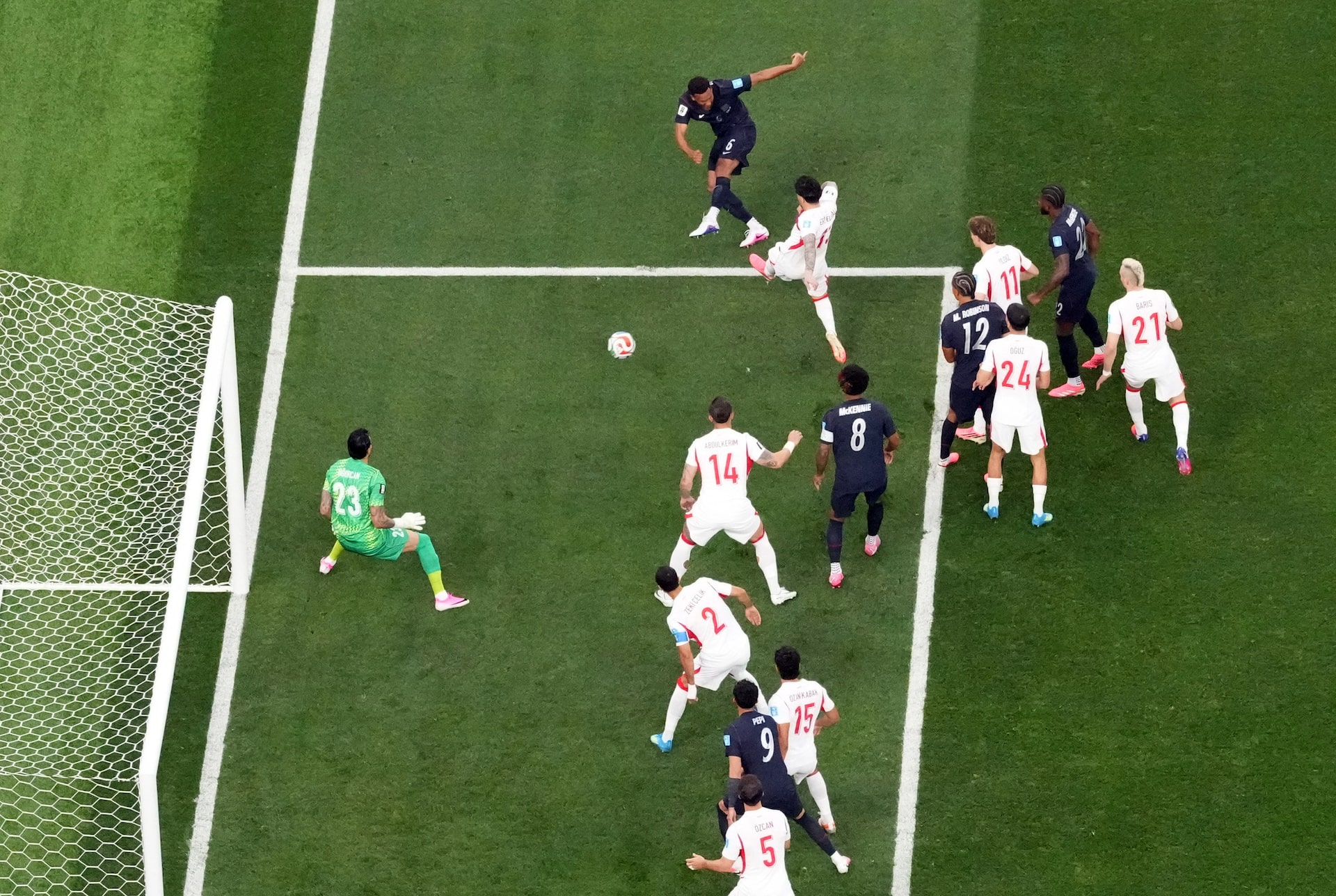
The record fell on Thursday night during the United States’ Group D match against Turkey at SoFi Stadium in Inglewood, California. USMNT defender Auston Trusty scored the record-breaking 173rd goal of the tournament in the 12th minute. Trusty’s header from a corner kick not only gave the USA an early lead but also wrote his name into World Cup history books.
The Moment the Record Fell
Auston Trusty’s 12th-minute header was the 173rd goal of the 2026 World Cup. That one shot beat the previous record of 172 goals from the entire 2022 tournament in Qatar. The difference is huge. Qatar 2022 needed all 64 matches to reach 172. This year’s tournament hit 173 in just 59 games.
The USMNT defender rose highest to meet a Christian Pulisic corner kick and powered his header past Turkey goalkeeper Ugurcan Cakir. The stadium erupted as fans realized they had just witnessed history. Within moments, social media lit up with the news that the 2026 World Cup had become the highest-scoring tournament ever.
“Surpassing the previous highest of 172 goals from Qatar underscores the excitement and attacking prowess that have already made the 2026 FIFA World Cup so unforgettable,” FIFA President Gianni Infantino said on Instagram after the record fell.
177 Goals and Counting
Four more goals were scored after Trusty’s opener in that match. Turkey fought back to snatch a dramatic 3-2 victory with a last-gasp winner. Those additional goals pushed the tournament total to 177. And the number keeps growing with every match.
To put that in perspective: the 2022 World Cup in Qatar produced 172 goals over 64 matches for an average of 2.69 goals per game. The 2026 tournament is averaging well over 3 goals per game so far. That is a massive jump in scoring output.
The expanded format certainly plays a role. FIFA expanded the World Cup from 32 to 48 teams for 2026, increasing the total number of matches from 64 to 104. More teams mean more games, and more games mean more goals. But the goals-per-game average is also higher than 2022, showing that the quality of attacking play has improved across the board.
Why This World Cup Is So High-Scoring
Several factors explain why the 2026 World Cup has produced so many goals. First, the tournament expanded from 32 to 48 teams. That means 104 total matches instead of 64. More matches naturally lead to more goals. But the goals-per-game average is also up compared to recent World Cups.
Second, several early group stage matches featured mismatches between traditional powerhouses and first-time qualifiers. Teams like Cape Verde, Iraq, and Senegal have played entertaining, open football. They have not parked the bus. That has led to goal-filled games.
Third, the quality of attacking talent at this tournament is extraordinary. Lionel Messi, Kylian Mbappe, Ousmane Dembele, Vinicius Junior, and Erling Haaland have all lit up the tournament. France alone has scored 10 goals in three group stage matches. Argentina and Brazil have also been free-scoring.
The expanded group format also means teams need to score more to secure progression. With only the top two in each group guaranteed a spot and the best third-placed teams advancing, every goal matters. Teams cannot afford to sit back and defend for draws.
Ousmane Dembele’s Hat-Trick Highlights the Goal Rush
France’s Ousmane Dembele delivered one of the most memorable performances of the tournament on Friday. The Ballon d’Or winner scored a sensational first-half hat-trick as France thrashed Norway 4-1 in Boston to secure top spot in Group I.
Dembele opened the scoring in the seventh minute. He struck again in the 20th minute. After Norway pulled one back through Thelo Aasgaard, Dembele made it 3-1 in the 32nd minute. His three goals came in just 25 minutes. Only Erich Probst of Austria (1954) has scored a faster hat-trick in World Cup history, getting three goals in the first 24 minutes against Czechoslovakia.
Desire Doue added a fourth late on as France finished the group stage with a perfect nine points from nine. Les Bleus have scored 10 goals in three matches and look like strong contenders for the title. Dembele now has four goals in the tournament, putting him in the race for the Golden Boot. His performance also took some pressure off captain Kylian Mbappe, who has carried much of France’s attacking burden in recent years.
France played without coach Didier Deschamps, who returned to France to attend his mother’s funeral. Deschamps, who will step down after the World Cup following 14 years in charge, is due back with the squad on Saturday. The team’s dominant performance in his absence spoke volumes about their depth and resilience.
Golden Boot Race Heats Up
With goals flying in from all directions, the race for the Golden Boot is wide open. Argentina’s Lionel Messi leads the scoring charts with five goals so far. The 39-year-old legend continues to defy age, leading his team’s attack with typical brilliance.
Brazil’s Vinicius Junior and France’s Kylian Mbappe are close behind with four goals each. Dembele also sits on four after his hat-trick against Norway. Norway’s Erling Haaland has only one goal so far but missed the France match as Norway rested him with qualification already secure.
The expanded tournament means more matches for top players. A Golden Boot winner could finish with 8-10 goals or more, which would smash previous records. The record for most goals in a single World Cup is 13, set by France’s Just Fontaine in 1958. That record has stood for 68 years. It might survive this year too, but several players could challenge the 10-goal mark.
Germany’s Shock Loss and Other Drama
Not every story at this World Cup has been about goals. Germany suffered a shock loss to Ecuador, which served as a “timely warning” according to Reuters. The loss has complicated Germany’s path through the knockout rounds and raised questions about their form heading into the next stage.
Ecuador’s president even declared a national holiday after the team reached the knockout phase. That shows how much this expanded World Cup means to smaller nations. The 48-team format has given more countries a chance to shine on the biggest stage.
Sweden also made headlines by drawing 0-0 with Japan to advance to the knockout rounds. But the drama continued after the match as Sweden’s Alexander Isak scolded teammate Anthony Elanga over confusion about their qualification status. The incident went viral on social media.
Mexico gave legendary goalkeeper Guillermo Ochoa a thunderous World Cup farewell in their 3-0 win, with Ochoa entering late in the match to a standing ovation. These emotional moments have made the 2026 World Cup unforgettable beyond just the goal tally.
What the Record Means for World Cup History
The scoring record is more than just a number. It tells us something important about the state of international football. Teams are playing more attacking football than ever before. The gap between traditional powers and emerging nations is closing in terms of entertainment value if not always results.
The previous record of 172 goals at the 2022 World Cup was already considered high. But this tournament has blown past that mark with 45 matches still to play. By the time the final is played at MetLife Stadium in New Jersey on July 19, the total could push past 250 goals. That would be unthinkable at any previous World Cup.
FIFA’s decision to expand to 48 teams has transformed the tournament. Critics worried it would dilute quality. Instead, it has produced more goals, more drama, and more memorable moments. The 2026 World Cup is on track to be the most entertaining edition ever played.
The group stage is almost complete, and the knockout rounds promise even more excitement. With the knockout bracket including a new last-32 round, teams that survive will need to win five matches to reach the final instead of four. That means more high-stakes matches and likely more goals.
France has already booked their spot in the last 32 at MetLife Stadium. Other heavyweight nations like Argentina, Brazil, and Spain are also expected to advance. If these teams meet in the knockout stages, we could see some all-time classic matches.
The Impact of the 48-Team Format
The expansion from 32 to 48 teams has been the biggest change to the World Cup format since 1998. Many observers expected it to produce more lopsided matches. Instead, it has mostly delivered competitive, open games with plenty of attacking action.
First-time qualifiers like Cape Verde and Iraq have played without fear. They have attacked when possible and entertained neutral fans. Even in losses, these teams have contributed to the goal tally. Only a handful of matches have been dull, low-scoring affairs.
The new format also means 16 teams advance from the group stage instead of 8 (plus the best third-placed teams). More teams staying alive deeper into the tournament means more meaningful matches. Every game carries weight because goal difference could decide who advances as one of the best third-placed finishers.
This has encouraged teams to keep attacking even when leading. In previous World Cups, teams with a 1-0 lead would often sit back. Now they push for more goals to improve their goal difference and secure a better knockout draw. This tactical shift has directly contributed to the record goal tally.
Looking Ahead: Can the Pace Continue?
The big question now is whether the goal-scoring pace can continue into the knockout rounds. Knockout matches tend to be tighter and more tactical. Teams become more cautious when one mistake means elimination. But the expanded format might change that dynamic too.
The new last-32 round creates an extra knockout layer. Teams that cruise through the group stage might face weaker opponents in their first knockout match. That could produce more lopsided scores. The tournament average of three goals per game could hold up.
France enters the knockout stage as one of the favorites after their commanding group performance. Dembele’s form has made them even more dangerous. Argentina, led by the evergreen Messi, also looks formidable. Brazil has been impressive too.
The 2026 World Cup has already secured its place in history as the highest-scoring tournament ever. With more goals certain to come in the knockout rounds, this record could stand for decades. Future World Cups will need to produce something special to top the 2026 edition.
For fans who love attacking football and lots of goals, this has been the greatest World Cup ever. And the best part is, there is still so much more to come. The 2026 World Cup goal record is not just a number. It is a testament to how exciting and unpredictable this beautiful game can be.
Author Bio: This article was written by a veteran sports journalist with over a decade of experience covering international football, including multiple FIFA World Cups and UEFA European Championships.
Leave a Reply