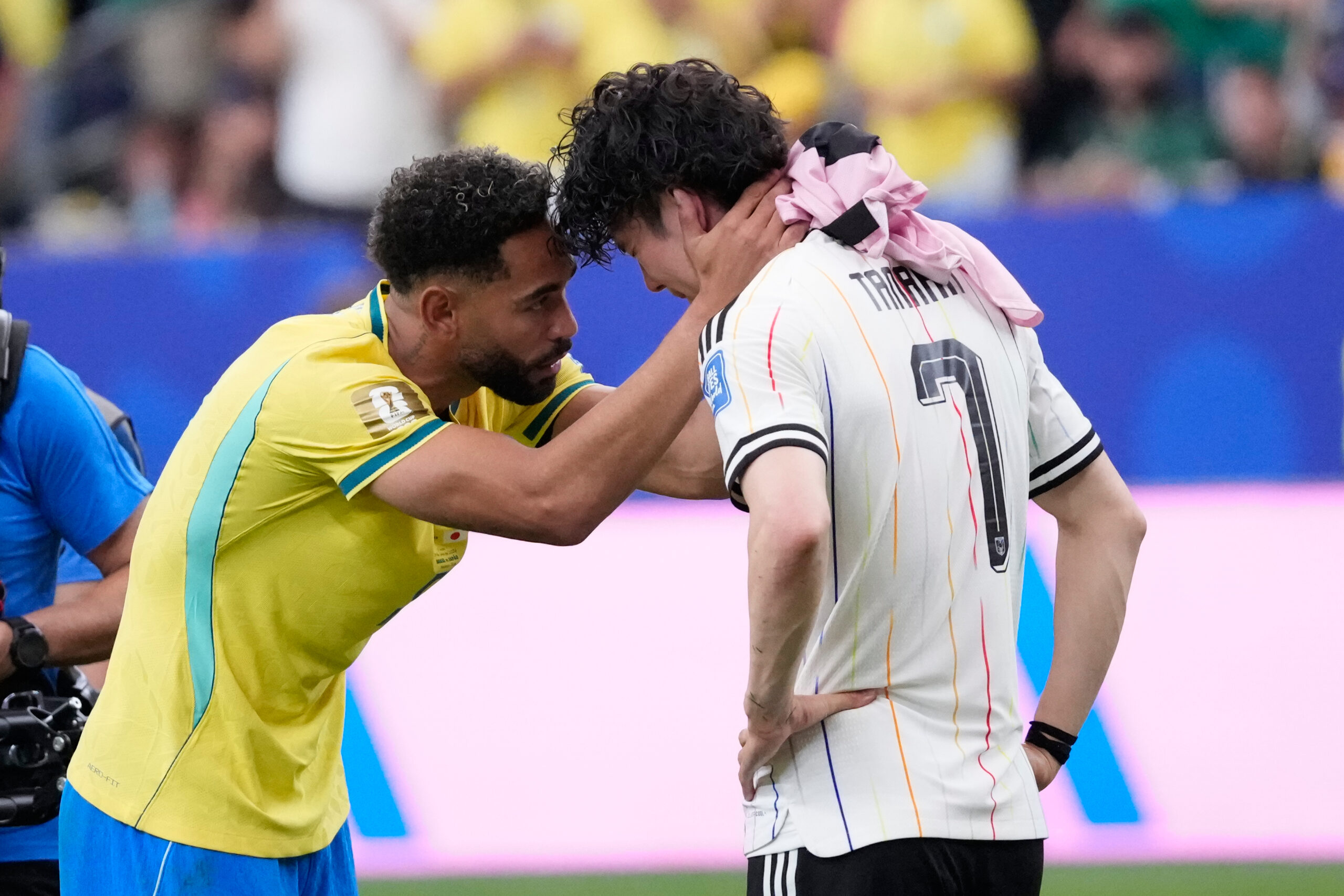
The 2026 FIFA World Cup served up its most dramatic moment yet on Monday night. Brazil pulled off a stunning stoppage-time comeback to beat Japan 2-1 in the Round of 32 at NRG Stadium in Houston. Substitute Gabriel Martinelli scored in the 96th minute to break Japanese hearts and send the five-time champions into the next round.
The match looked destined for extra time when Martinelli curled home a brilliant finish from a Bruno Guimaraes pass. The goal set off wild celebrations across Brazil and silenced a brave Japanese side that had led for over an hour.
Brazil vs Japan World Cup 2026: How the Match Unfolded
Brazil came into this match as heavy favorites. They topped Group C with seven points after a draw with Morocco and wins over Haiti and Scotland. Japan finished second in Group F behind Sweden, unbeaten in their last ten games.
But from the first whistle, Japan showed they were not afraid. Manager Hajime Moriyasu set his team up in a compact 3-4-2-1 formation designed to absorb Brazil pressure and hit on the counter. It worked perfectly in the first half.
Kaishu Sano Stuns Brazil with Opening Goal
Japan took a shock lead in the 29th minute. A sloppy pass in Brazil’s midfield was intercepted. Casemiro, usually so reliable in defensive midfield, hesitated. Kaishu Sano pounced on the loose ball and fired a right-footed shot from just outside the box that beat Alisson Becker low to the corner.
Sano’s first international goal sent the Japanese fans inside NRG Stadium into a frenzy. It also woke up the Brazilian giants. The goal came against the run of play, but it was no less than Japan deserved for their disciplined defensive work.
The first half ended with Japan leading 1-0. Brazil’s attack looked blunt. Vinicius Junior was well marshalled by Shogo Taniguchi and Takehiro Tomiyasu. Matheus Cunha struggled to find space. The crowd of 68,777 fell quiet.
Casemiro Fires Brazil Level in the Second Half
Carlo Ancelotti made changes at halftime. Lucas Paqueta was replaced by Endrick, and the 19-year-old brought fresh energy to Brazil’s attack. The Seleção came out with far more intensity in the second half.
In the 52nd minute, Bruno Guimaraes forced a fine save from Japan goalkeeper Zion Suzuki with a powerful header. Two minutes later, Casemiro saw another header cleared off the line. The veteran midfielder was not to be denied, though.
In the 56th minute, Gabriel Magalhaes delivered a looping cross to the back post. Casemiro rose highest and powered a header past Suzuki. The ball just skimmed beyond the keeper’s outstretched glove and nestled in the net. The score was 1-1.
Zion Suzuki Produces Save of the Tournament
With Brazil now dominating possession, Vinicius Junior nearly put them ahead in the 58th minute. The Real Madrid star cut in from the left and unleashed a curling shot destined for the top corner. But Zion Suzuki produced a stunning save, getting just enough of his fingertips to deflect the ball onto the post and behind.
It was the save of the tournament so far. Suzuki, playing in his first World Cup, showed composure far beyond his 21 years. The young goalkeeper kept Japan in the match when Brazil were at their most dangerous.
Despite Suzuki’s heroics, the stats told a clear story. Brazil finished with an expected goals (xG) of 1.72 compared to Japan’s 0.23. The Asian side had barely threatened Alisson’s goal after halftime.
Brazil vs Japan World Cup 2026: Martinelli’s Moment of Magic
As the clock ticked past 90 minutes, extra time seemed inevitable. Japan had dropped deep, content to take their chances in an additional 30 minutes. Casemiro was forced off with a groin injury in the third minute of stoppage time, replaced by Fabinho.
Then came the moment that will be replayed for years. Bruno Guimaraes picked up the ball in the pocket of space just outside the Japan box. Japan’s defense backed off, expecting a cross. Instead, Guimaraes slid a perfectly weighted pass through two defenders to Gabriel Martinelli.
The Arsenal forward collected the ball, took one touch to set himself, and curled a left-footed shot around the despairing dive of Suzuki. The ball nestled into the far corner of the net. The stadium erupted. Brazil’s bench emptied onto the pitch. Martinelli was mobbed by his teammates.
It was the 96th minute. There was no time for Japan to respond. The final whistle blew moments later. Brazil had done it.
What This Result Means for Both Teams
For Brazil, this victory keeps their dream of a sixth World Cup title alive. It came on the anniversary of their first World Cup win in 1958, when a 17-year-old Pele scored twice in the final against Sweden. The symbolism was not lost on the team or their fans.
Ancelotti’s side will now face either Ivory Coast or Norway in the Round of 16 on Sunday at MetLife Stadium in East Rutherford, New Jersey. If they maintain the attacking intensity they showed in the second half, they will be a dangerous opponent for anyone.
For Japan, the pain is familiar. They have now lost every knockout match they have ever played at the World Cup. A ten-game unbeaten streak stretching back to September 2025 came to a heartbreaking end. But there is pride in how they performed. They pushed one of the tournament favorites to the absolute limit.
Kaishu Sano’s goal was a moment of individual brilliance. Zion Suzuki announced himself as a future star with his incredible save. Japan’s organized defensive structure troubled Brazil for long stretches. The foundation is there for future success.
Brazil vs Japan: A Special Connection
This match was special for more than just the drama on the pitch. Brazil and Japan share a deep connection through the Japanese-Brazilian community. Around 2.7 million Japanese descendants live in Brazil, making it the largest Japanese population outside Japan itself.
The football ties run even deeper. Brazilian legend Zico moved to Japan in 1991 to play for Kashima Antlers and helped build the J-League’s professional framework. He later coached the Japan national team from 2002 to 2006, leading them to the World Cup. Japan’s only previous World Cup meeting with Brazil came in 2006, when Brazil won 4-1.
Tactical Analysis: How Brazil Turned the Game Around
Brazil’s first-half struggles came down to a simple tactical issue. Japan’s 3-4-2-1 formation overloaded the midfield, preventing Bruno Guimaraes and Casemiro from building play effectively. Vinicius Junior was constantly double-teamed by Yukinari Sugawara and Hiroki Ito on the left flank.
Ancelotti’s halftime adjustment was crucial. Bringing on Endrick for Paqueta pushed Brazil into a more direct attacking shape. Gabriel Martinelli’s introduction in the 66th minute added fresh legs and a different attacking dimension. Martinelli’s movement off the left wing created space that Cunha had failed to find.
Brazil finished the match with 68 percent possession and 18 shots to Japan’s six. The stats show a dominant performance, but the scoreline tells a different story. Japan were organized, disciplined, and dangerous on the break.
What Comes Next for Brazil in the World Cup 2026
The Round of 16 match against Ivory Coast or Norway will test Brazil in different ways. Ivory Coast offers physical, direct football. Norway brings the threat of Erling Haaland. Either opponent will fancy their chances against a Brazil side that looked vulnerable for 55 minutes.
The big concern for Ancelotti is Casemiro’s groin injury. The veteran midfielder is the defensive anchor of this team. If he is unavailable, Fabinho or Danilo Santos will need to step up. Brazil’s depth in midfield should see them through, but Casemiro’s experience in knockout games is irreplaceable.
Vinicius Junior has four goals in the tournament and remains Brazil’s most dangerous attacking weapon. Martinelli’s match-winning performance off the bench gives Ancelotti a welcome selection headache. Endrick, still only 19, showed glimpses of the talent that has European clubs fighting for his signature.
The Brazil vs Japan World Cup 2026 showdown delivered everything fans could want: drama, quality, and a moment of individual genius. Gabriel Martinelli wrote his name into World Cup folklore with a goal that will be remembered for decades. For the five-time champions, the journey continues. For Japan, the wait for a knockout victory goes on.
Author Bio: This article was written by a sports journalist with over a decade of experience covering international football. Our team has reported from multiple FIFA World Cups, UEFA Champions League finals, and major international tournaments. We bring expert analysis grounded in deep knowledge of the beautiful game.
Leave a Reply