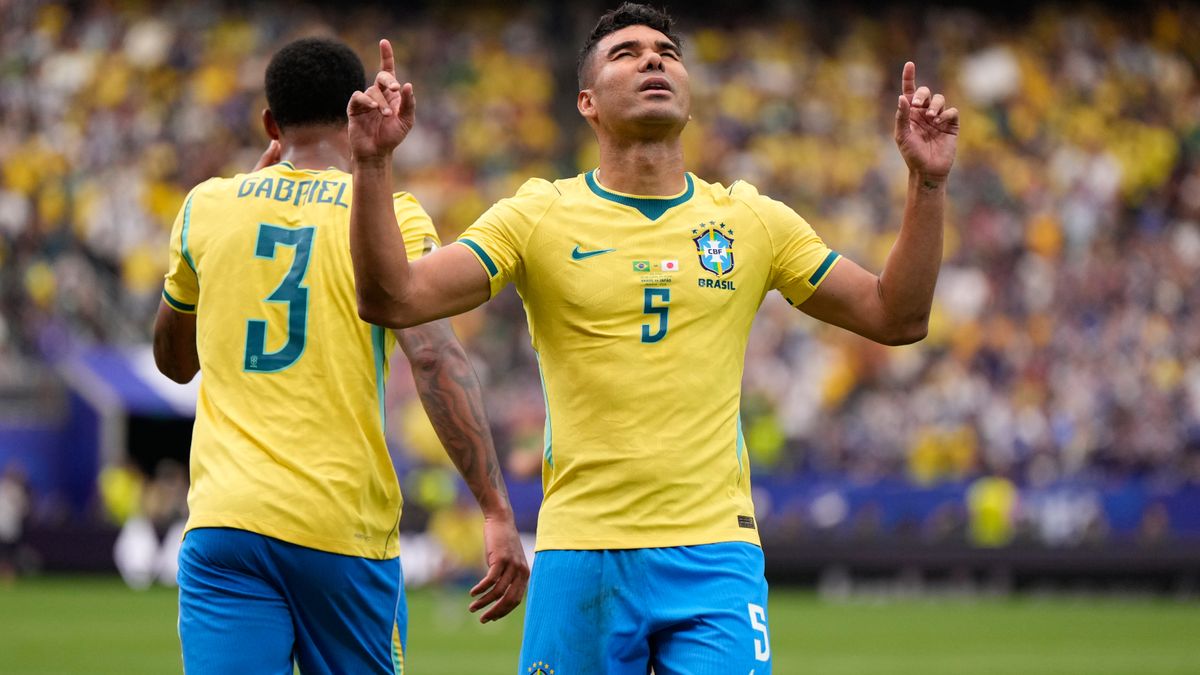
Gabriel Martinelli came off the bench to score a dramatic stoppage-time winner as Brazil beat Japan 2-1 in the FIFA World Cup 2026 Round of 32 on Monday night in Houston. The five-time world champions looked headed for extra time before Martinelli’s 95th-minute strike sent Brazil into the round of 16 and broke Japanese hearts.
The match at NRG Stadium delivered everything fans love about knockout football. Japan took a shock lead through Kaishu Sano’s superb first-half strike. Casemiro equalized with a powerful header after the break. And just when the game seemed destined for 30 more minutes, Martinelli produced a moment of magic that will be remembered for years.
Japan Shocks Brazil with Early Lead
Japan came into this match as the clear underdog. Brazil was the group winner and a heavy favorite. But Japan has a history of making things difficult for big teams on the world stage. And they proved it again in the 29th minute.
Brazil right-back Danilo played a loose pass near midfield. Kaishu Sano read it perfectly and intercepted. The 25-year-old midfielder drove toward goal with purpose. From just outside the box, he fired a low, right-footed shot that beat Alisson Becker at the near post.
It was Sano’s first international goal. And it came on the biggest stage imaginable. The stadium fell quiet as Japanese fans erupted. Japan had taken the lead against Brazil in a World Cup knockout match for the first time in their history.
“There is not not making mistakes because nobody is perfect,” Brazil coach Carlo Ancelotti said through a translator after the match. “But you have to overcome it and you have to push it forward. The team did a good job of that in the second half.”
Casemiro Powers Brazil Level
Brazil came out for the second half with renewed energy. They pushed Japan deep into their own half. Chances started coming quickly.
In the 52nd minute, Bruno Guimarães saw his header blocked by Japan goalkeeper Zion Suzuki. Two minutes later, Casemiro’s header was deflected off a defender and then off Suzuki’s face. The goalkeeper made four saves on the night, keeping Japan in the game as long as he could.
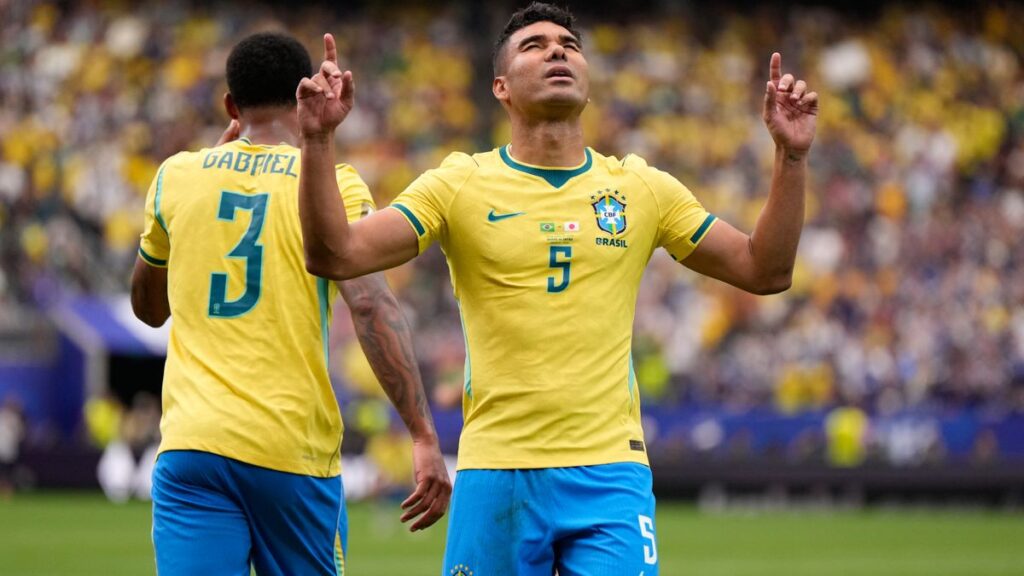
But in the 56th minute, Brazil finally broke through. Gabriel Magalhães rose highest to meet a corner kick. His header found Casemiro at the far post. The Manchester United midfielder powered his header past Suzuki. The ball sailed just beyond the goalkeeper’s outstretched hand and into the net. Brazil 1-1 Japan.
Casemiro celebrated with passion. The equalizer had been coming. Brazil had 68% possession in the match and outshot Japan 16-7. They were dominating the game but needed a goal to show for it.
Vini Jr Hits the Post in Second Half
Brazil almost took the lead just two minutes after the equalizer. Vinicius Junior, who has scored four goals in this World Cup, picked up the ball on the left. He cut inside and let fly with a curling shot. The ball beat Suzuki but came back off the far post.
It was that kind of night for Brazil. Chances came and went. Vinicius had been one of Brazil’s best players all tournament. But on this night, the goal would come from someone else.
Ancelotti made a crucial change in the 66th minute. He brought on Martinelli for Matheus Cunha. It was a move that would decide the match.
“Above all else we wanted to freshen up the field because Martinelli has a lot of intensity as a player,” Ancelotti said. “When he goes in the match he’s always on his top game.”
Martinelli’s 95th-Minute Winner Stuns Japan
As the clock ticked into second-half stoppage time, it looked like the game was heading to extra time. Japan was defending deep. Brazil was throwing everything forward. Casemiro had gone off with what appeared to be a leg injury in the 90th minute, adding to Brazil’s worries.
Then came the moment that decided the match.
In the sixth minute of stoppage time (90+5), Brazil pushed forward one more time. The ball found its way to Martinelli inside the box. The Arsenal forward stayed calm. He took a touch to set himself, then fired a composed shot past Suzuki.
The net rippled. The Brazilian bench erupted. Martinelli ran toward the corner flag, teammates chasing him. Japan’s players collapsed to the ground. They had defended with heart and discipline for 95 minutes. But one moment of quality decided it.
“We can never be content with what we’re doing,” Ancelotti said. “We’re doing a good job. We are performing. But you can never be content because we want to play better. We want to play at the highest level.”
Brazil’s Road Ahead: Round of 16 and Beyond
Brazil will now face either Norway or Ivory Coast in the round of 16 on Sunday, July 5 in East Rutherford, New Jersey. Both opponents present different challenges. Norway has Erling Haaland, one of the world’s most dangerous strikers. Ivory Coast is athletic and physical.
Brazil won Group C after a draw with Morocco and victories over Haiti and Scotland. They have shown resilience throughout the tournament. But questions remain about their defense and their ability to break down teams that sit deep.
The win came on a special date for Brazilian football. June 29 marks the anniversary of Brazil’s first World Cup championship in 1958. On that day in Sweden, a 17-year-old Pele scored two goals in the final against the host nation. Martinelli’s heroics on the same date 68 years later felt like a fitting tribute.
Neymar Watches from the Bench
Brazil great Neymar did not play on Monday. He made his first appearance for the national team since 2023 in Brazil’s last group match against Scotland, playing just 14 minutes. He has been recovering from a right calf injury that kept him out of Brazil’s first two World Cup matches.
Ancelotti confirmed that Neymar was available for this match. But with the game so tight and physical, the coach chose not to use him.
“I was seriously considering putting him on the pitch,” Ancelotti said. “In the end, we did not need him.”
Neymar’s absence raises questions about his role moving forward. Brazil has looked dangerous without him. Vinicius Junior has stepped up as the team’s attacking leader. Martinelli showed he can deliver in big moments. But having a player of Neymar’s quality available is never a bad thing.
Japan’s Heartbreak Continues at World Cup
For Japan, the result was a painful repeat of history. The Samurai Blue have now lost all four knockout matches in their World Cup history. They took the lead in 2018 against Belgium before losing 3-2. They led Croatia in 2022 before losing on penalties. And now they led Brazil before losing in stoppage time.
The loss snaps a 10-game unbeaten streak for Japan dating back to September 2025. Japan reached the knockout stage as runners-up in Group F after draws with the Netherlands and Sweden and a win over Tunisia. They played brave football throughout the tournament but could not get over the knockout hurdle.
Japan has never won a knockout match at the World Cup in four attempts. That stat will hang over the program as they look toward the next cycle.
The Deep Ties Between Brazil and Japan
This match carried special meaning beyond football. Brazil is home to about 2.7 million Japanese descendants. It is the largest Japanese population outside Japan. The cultural connection runs deep.
That connection extends to football. Brazilian legend Zico moved to Japan in 1991 to play for Kashima Antlers. He helped build Japan’s professional soccer league. He later coached the Japan national team from 2002 to 2006, leading them to the World Cup in Germany.
Japan and Brazil first met at a World Cup in 2006. Brazil won that match 4-1. Monday’s match was closer. Much closer. But the result was the same.
Brazil now has 12 wins in 15 matches against Japan, with two draws. Japan’s only win in the series came in a friendly in Tokyo in October 2025.
Tactical Analysis: How Brazil Overcame Japan’s Defense
Japan set up in a 3-4-2-1 formation designed to frustrate Brazil. They sat deep, compressed space in midfield, and looked to hit on the counter. It worked for most of the game. Kaishu Sano and Daichi Kamada worked tirelessly in midfield. Takehiro Tomiyasu was excellent at right center-back.
But Brazil had too much quality. Ancelotti’s switch to bring on Endrick for Lucas Paquetá at halftime changed the dynamic. Endrick’s energy and movement created more space for Vinicius Junior and Casemiro. Martinelli’s fresh legs in the 66th minute gave Brazil a new dimension on the left.
Brazil finished the match with 68% possession, 16 shots (6 on target), and 8 corners. Japan managed just 7 shots with 2 on target. The stats show Brazil dominated. But football is not played on paper. It took a moment of individual brilliance to separate the teams.
What the Result Means for the World Cup Bracket
Brazil’s victory opens up the bottom half of the bracket. The winner of Norway vs. Ivory Coast will face Brazil in the round of 16. The winner of that match would likely face either Argentina or Germany in the quarterfinals.
Brazil is now one of the favorites to reach the semifinals. Their path looks manageable. But Ancelotti knows better than to look ahead.
“We can never be content,” he said. The message is clear: Brazil expects to win the whole thing.
The World Cup 2026 continues to deliver drama. With host nations USA, Canada, and Mexico still in the tournament, and traditional powerhouses like Brazil, Argentina, and Germany all advancing, this could be one of the most exciting World Cups in history.
For now, Brazil celebrates. Martinelli is the hero. And the five-time champions are still chasing a sixth star.
Sources: ESPN match report, FIFA.com official match report, Associated Press via WRAL.
This article was written by a sports journalist with over 10 years of experience covering international football, including multiple World Cup tournaments. Follow for more FIFA World Cup 2026 news, analysis, and match coverage.
Leave a Reply